
Autonomous Vehicle Accidents in Texas: Your Rights, Your Insurance, and Your Next Move
Quick Answer: If a driverless or autonomous vehicle hits you in Texas, follow the same immediate steps as any crash, but document everything about the AV’s technology and operator. Liability in autonomous vehicle accidents can fall on the human operator, the vehicle owner, or the manufacturer depending on the situation. Your own uninsured/underinsured motorist coverage may also play a critical role in protecting you.
Why This Matters Right Now for Texas Drivers
This is not a futuristic hypothetical. Autonomous and semi-autonomous vehicles are already on Texas roads. Waymo operates robotaxi services. Tesla vehicles are running Full Self-Driving (FSD) beta on public roads. Automated delivery vehicles from companies like Nuro operate in Texas metro areas. Freightliner, Volvo, and others are testing autonomous semi-trucks on Texas interstates.
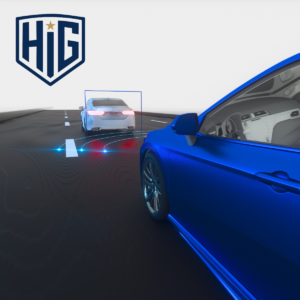 Texas has been deliberately permissive about autonomous vehicle operations. Unlike some states that require safety drivers in all AVs, Texas allows fully driverless operation under certain conditions, with relatively minimal regulatory friction. That means the chances of encountering an autonomous vehicle in everyday driving — particularly in Houston, Katy, and the wider Fort Bend County area — are increasing every year.
When one of those vehicles causes an accident, the liability picture is nothing like a standard two-car crash. The technology is new, the legal framework is still developing, and without the right information and insurance coverage in place, you could find yourself in a complex claim situation without a clear path forward.
The Immediate Steps After Being Hit by an Autonomous Vehicle
The first minutes after any accident are critical for both your safety and your legal position. When the other vehicle is autonomous or semi-autonomous, several additional documentation steps apply:
- Call 911 immediately. A police report is important in any accident, but it is particularly important in an AV accident because it establishes an official record of what type of vehicle was involved, whether a safety driver was present, and the initial assessment of fault
- Do not touch or move the autonomous vehicle. AV systems log data continuously. Preserving the vehicle in its post-accident position matters for any subsequent technical investigation
- Photograph and video everything. Capture the AV’s exterior from all angles, focusing on any sensor arrays, cameras, lidar housings, and identifying markings. Note whether a safety operator was present in the vehicle. Capture the vehicle’s operating company branding if visible
- Get the vehicle’s full identification. License plate, VIN if accessible, operating company name, any fleet identification numbers, and the name and contact information of any human occupant or safety operator
- Note the operational context. Was the vehicle using its autonomous system at the time of impact? Was it in a geofenced operational zone? Note any road conditions, signal timing, and environmental factors that might be relevant to how the system was operating
- Seek medical attention. Even if you feel fine immediately after the accident, symptoms of soft tissue injuries and concussions often appear hours or days later. A documented medical evaluation establishes the injury timeline that matters for any injury claim
- Call your insurance agent before you talk to the AV company’s claims department. AV operators and their insurers have experienced claims professionals working these cases. You should have someone in your corner before that conversation begins
Who Is Actually Liable When an Autonomous Car Causes an Accident?
This is the question that makes AV accident claims complicated, and it does not always have a clean answer. Liability in an autonomous vehicle accident in Texas can potentially fall on several parties, and in some cases, on more than one simultaneously:
The Human Operator or Safety Driver
If a human was in the vehicle and had the ability to intervene in the autonomous system’s operation, Texas law may treat that person as the operator for liability purposes, particularly if their failure to monitor or intervene contributed to the accident. A safety driver who was distracted by a phone while the autonomous system failed to respond appropriately may bear personal liability.
The Vehicle Owner or Fleet Operator
In the case of a commercial AV fleet — a robotaxi company, a delivery service, a trucking company — the fleet operator carries commercial auto liability coverage that would typically apply when one of their vehicles causes an accident, regardless of whether a human was behind the wheel at the time. The operator’s commercial policy is usually the first line of coverage in these cases.
The Technology Manufacturer
If the accident was caused by a failure of the autonomous driving system itself — a sensor malfunction, a software error, a mapping failure — the manufacturer of that technology may bear product liability exposure. These claims are complex, requiring expert analysis of vehicle data, software logs, and system performance records. They take time to resolve and typically involve litigation.
Both the Operator and Manufacturer
In many AV accidents, liability is shared. The system may have performed as designed, but the design had a flaw. Or the operator may have deployed the vehicle in conditions outside its operational design domain.
These scenarios result in shared liability that can take months or years to fully sort out, which is precisely why having strong coverage on your own policy matters so much — you should not have to wait for that resolution to get your car repaired and your medical bills addressed.
The Role of Your Own Insurance in an AV Accident
Here is the practical reality: even if the autonomous vehicle and its operator are clearly at fault, getting a payment from their insurer can take time. AV accident claims often involve data preservation requests, technical investigations, and legal processes that do not move at the speed you need when your car is totaled, and you are in physical therapy.
Your own auto insurance plays a critical protective role in this environment, specifically through two coverages that are often underestimated:
Uninsured/Underinsured Motorist Coverage (UM/UIM)
Even though AV operators carry commercial policies, those policies have limits, and disputes over liability can temporarily stall access to those funds. UM/UIM coverage on your own policy can step in to cover your damages while the broader liability question is being resolved, and in situations where the at-fault party’s coverage is genuinely inadequate for your losses.
Texas requires insurers to offer UM/UIM coverage, and you must decline it in writing to not have it. If you do not know whether you have it, that is an urgent conversation to have with your agent. The auto insurance page at Hayslip Insurance Group explains how UM/UIM works in a Texas context.
Medical Payments Coverage (MedPay) and PIP
Personal Injury Protection (PIP) covers your medical expenses and a portion of lost wages regardless of fault — it does not matter that the AV was at fault, and it does not wait for a liability determination. In an AV accident where the liability picture is complicated, PIP can provide immediate financial relief while the larger claim is worked out.
What Makes AV Accident Claims Uniquely Complex
Beyond the liability question, several technical factors make these claims different from standard auto accidents:
- Data preservation: Autonomous vehicles generate enormous volumes of operational data — sensor readings, steering inputs, speed data, system status logs, and camera footage. This data is critical evidence and must be preserved immediately. AV operators have legal teams experienced in controlling that narrative. You need professional representation early
- Black box and system log access: Obtaining the AV’s operational data typically requires a legal process (preservation letter, subpoena, or litigation). Unlike a standard accident where video from a nearby business might be the key evidence, the most important evidence in an AV crash is inside the vehicle’s computing systems
- Expert witnesses: Establishing what the AV system should have done and why it did not requires specialized engineering testimony that is both expensive and time-consuming to obtain
- Evolving legal standards: Texas law on AV liability is still developing. Decisions being made in courts today will shape the legal landscape for years. The outcome of your claim may be influenced by cases that have not yet been decided
- Multiple jurisdictions: AV manufacturers are typically not Texas-based. A product liability claim against a California-headquartered technology company operating in Texas introduces jurisdictional complexity that most personal injury cases do not involve
Semi-Autonomous vs. Fully Autonomous: The Coverage Difference
| Factor | Semi-Autonomous (Human Still Driving) | Fully Autonomous (No Human Driver) |
|---|---|---|
| Who is the legal operator? | Human driver, with possible shared liability | Fleet operator or manufacturer |
| Coverage source | Driver’s personal auto policy | Operator’s commercial policy |
| Product liability path | Possible if driver-assist system caused accident | More direct if technology failure caused accident |
| Data to preserve | Standard crash data + driver-assist logs | Full AV sensor suite, system logs, geofencing data |
| Claim resolution timeline | Longer than standard, shorter than full AV | Often lengthy due to technical complexity |
| Your UM/UIM importance | High | Very high |
The Bigger Picture: Are You Protected for the Road Ahead?
The AV accident scenario is a vivid illustration of why coverage adequacy matters more than just meeting minimum requirements. Texas requires only $30,000 per person / $60,000 per accident in bodily injury liability from other drivers. If an AV injures you seriously and their insurer disputes liability while you are waiting for a resolution, your own UM/UIM coverage becomes your financial lifeline.
Drivers who carry only state minimum coverage and skip UM/UIM are assuming that everyone else on the road will have adequate insurance and will quickly accept fault. Neither assumption holds in a standard accident, and it’s even less reliable in an autonomous vehicle accident.
A personal umbrella policy adds another layer, not just for your liability, but as a consideration in your overall risk management picture. And reviewing your full auto coverage structure with an agent who understands the emerging AV landscape is something Texas drivers should prioritize sooner rather than later.
Why Choose Hayslip Insurance Group When the Roads Are Changing
Most insurance agents are still answering questions about hail damage and fender benders. The questions Texas drivers will increasingly face involve autonomous systems, shared liability, and technology-driven claims that require a different kind of expertise to navigate.
- Coverage architecture that anticipates emerging risks: Hayslip Insurance Group builds auto coverage structures that address not just today’s roads but tomorrow’s. That means ensuring UM/UIM is properly in place, evaluating PIP levels that reflect real medical costs, and identifying gaps before they become problems
- Independent access means better options: Different carriers are adapting to the AV era at different speeds. As an independent agency with access to multiple insurance carriers, Hayslip can identify which programs offer the strongest protection for clients navigating an increasingly automated driving environment
- Local presence with real accountability: When you are in an accident and need someone to advocate with an insurer, you want an agent who answers the phone and knows your policy. That is a different experience than filing a claim through an app or a national call center
- Serving Texas drivers across a broad region: From Katy to Fulshear to Houston, the roads these drivers travel increasingly include autonomous and semi-autonomous vehicles. Having coverage that reflects that reality is no longer optional — it is the standard of a well-structured auto policy
The autonomous vehicle era is not approaching. It is here. Making sure your coverage reflects that reality is a conversation worth having now, not after an accident. Request a full auto coverage review and find out whether your current policy is built for the roads you are actually driving on.
Frequently Asked Questions: Driverless Car Accidents in Texas
Does Texas law hold autonomous vehicles to the same standards as human drivers?
Texas has adopted a framework that generally treats the operator or owner of an autonomous vehicle as responsible for its compliance with traffic laws when the system is engaged. The Texas Transportation Code has been amended to address AV operations, and the legal standard continues to evolve as the technology becomes more prevalent. In practice, fault in an AV accident is assessed through a combination of traffic law standards, product liability principles, and the specific circumstances of how the autonomous system was operating at the time of the crash.
What if the driverless car that hit me was uninsured or underinsured?
Commercial AV operators are required to maintain insurance or demonstrate financial responsibility under Texas law, and the minimums for commercial vehicles are substantially higher than for personal vehicles. However, if the at-fault AV was operating without adequate insurance, or if the operator’s coverage limits are insufficient for your losses, your own uninsured/underinsured motorist coverage becomes essential. This is one of the strongest arguments for making sure your UM/UIM limits are robust rather than minimum — particularly if you drive in metro areas where AVs are more common.
Can I sue the autonomous vehicle’s manufacturer?
Potentially, yes, if the accident was caused by a technology failure rather than human operator error. Product liability claims against AV manufacturers are an emerging and actively litigated area of Texas law. These cases require proving that a defect in the autonomous system’s design, programming, or hardware caused the accident. They typically involve extensive technical analysis, expert witnesses, and discovery of the vehicle’s operational data. An attorney specializing in automotive product liability and an insurance advocate working in parallel are both important in these situations.
How long will it take to resolve a claim involving a driverless car?
Longer than a standard accident claim, in most cases. The timeline depends on whether liability is disputed, whether a product liability component is involved, how quickly operational data can be preserved and analyzed, and whether the claim settles or proceeds to litigation. Simple cases where the AV operator’s insurer accepts liability quickly can resolve in weeks to months. Complex product liability cases can take years. This is precisely why having strong first-party coverage — UM/UIM, PIP, and collision — on your own policy matters so much. You should not have to wait for the broader liability determination to pay for your car repair or your doctor’s visit.